Saudi Luxury Runs on Culture, Not Campaigns
Walk into almost any global luxury brand’s regional strategy meeting and you will find a version of the same document. Market size projections. Demographic data. A flagship location in a premium mall. A campaign adapted from Paris or Milan with local touches applied at the edges. The logic is familiar.The brand has already established its reputation. The consumer has spending power. The formula has worked everywhere else. What that document rarely contains is an honest account of what the Saudi luxury consumer is actually buying. Not the product. The experience of being received.
And that is a different thing entirely.
The Saudi luxury market does not reward the most prestigious brand. It rewards the brand that understands where it has arrived.
The Formula Is Right. The Market Has Moved.
For most of the past century, global luxury operated on a consistent logic. Heritage justified price. Scarcity created desire. The object itself, the watch, the handbag, the couture piece, was both the product and the message, with brand identity expressed through a company name, logo, and design as much as through the item itself. In practice, this was brand marketing: using those signals to create a unique identity, while a brand, whether a name, logo, or design tied to a company’s goods and services, distinguished that company among competitors. Owning it was the statement.
That model was designed around a specific consumer: an individual making a personal choice that reflected private taste and social positioning. It worked because the unit of consumption was the individual, and brand identity shaped consumer perception, trust, and loyalty at that level, often making quality, prestige, and ownership cues central to purchase decisions.
In Saudi Arabia, the unit of consumption is frequently not the individual. It is the group.
This is not a cultural footnote. It is a structural reality that changes almost everything about how a luxury experience, and the brand behind it, needs to be designed.
For global luxury brands, marketers, and strategists trying to succeed in Saudi Arabia, that shift changes the meaning of brand itself. Here, a brand is not only prestige, product, or visual identity; it is cultural relevance, emotional sincerity, and trust earned by understanding the consumer’s social context and values. The restaurant that seats eight for a private dinner is not an edge case. The hospitality suite that accommodates an extended family gathering is not a special request.
The experience that unfolds across multiple generations, with different expectations present at the same table, is the norm. This article examines how Saudi luxury consumers differ from global luxury markets, why cultural intelligence and hospitality function as core brand assets, how group-based consumption challenges standard brand assumptions, and how luxury is being redefined in the Kingdom.
Brands that design for the individual consumer and accommodate the group will always feel slightly misaligned. Brands that design for the group and honour the individual within it are the ones that generate genuine loyalty, making decision making faster through repeat purchase habits and creating customers who are more willing to pay premium prices, which in turn allows strong brands to support higher prices. In a market this sophisticated, brands that fail to adapt risk becoming irrelevant.
Hospitality Here Is Not a Service Standard. It Is a Social Contract for Customer Trust.
There is a concept embedded in Arab hospitality culture that does not translate cleanly into a service training manual. It is the idea that generosity toward a guest is not a courtesy. It is an obligation, one that carries meaning far beyond the transaction.
When a Saudi guest enters a luxury environment, they are not simply evaluating the product or assessing the service efficiency. They are also judging the brand image and reputation behind the experience, because positive impressions foster trust and loyalty. They are reading whether the space understands this contract. Whether training taught the people in it to perform warmth or whether they genuinely express it.
The difference is not subtle. It is immediately felt.
There are international luxury brands in Saudi Arabia that score exceptionally well on every global service metric, speed, accuracy, presentation, brand consistency, and still fail to generate the emotional connection that drives return visits and social recommendation. A seamless customer experience supports retention and repeat visits because a brand’s standing influences buying decisions. The mechanics were visible. The meaning was absent.
What those brands missed is that in this market, a slightly slower interaction that feels genuinely attentive will always outperform a technically flawless one that feels procedural. Efficiency is a baseline expectation. Sincerity is the differentiator.
No campaign recovers what a cold interaction loses: customer trust, loyalty, and standing with customers.
You can spend a significant budget building awareness. You cannot spend your way out of feeling foreign.
AlUla Did Not Succeed Because of Its Amenities, But Because of Its Brand Equity.
Working on destination positioning within Saudi Arabia brings a particular kind of clarity. You see quickly which messages land and which ones disappear into the noise. You learn that the same information, framed differently, produces entirely different responses.
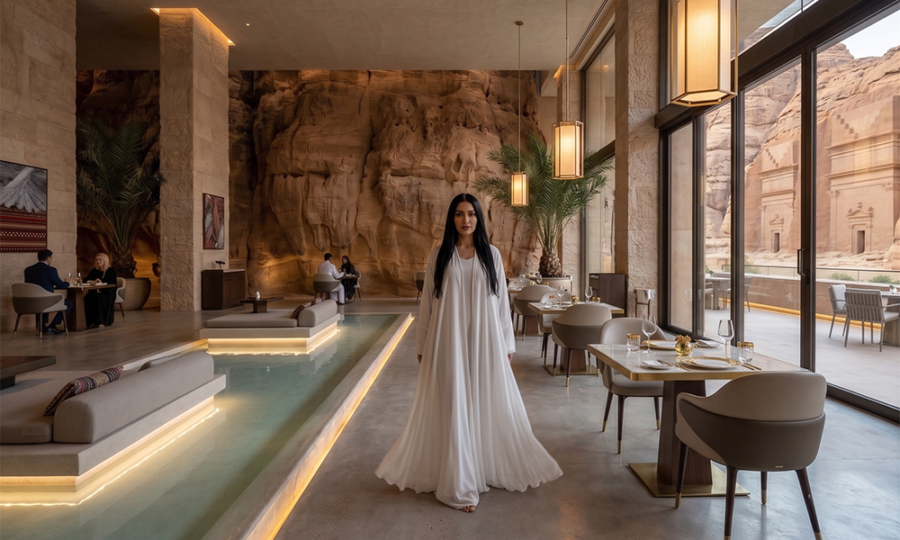
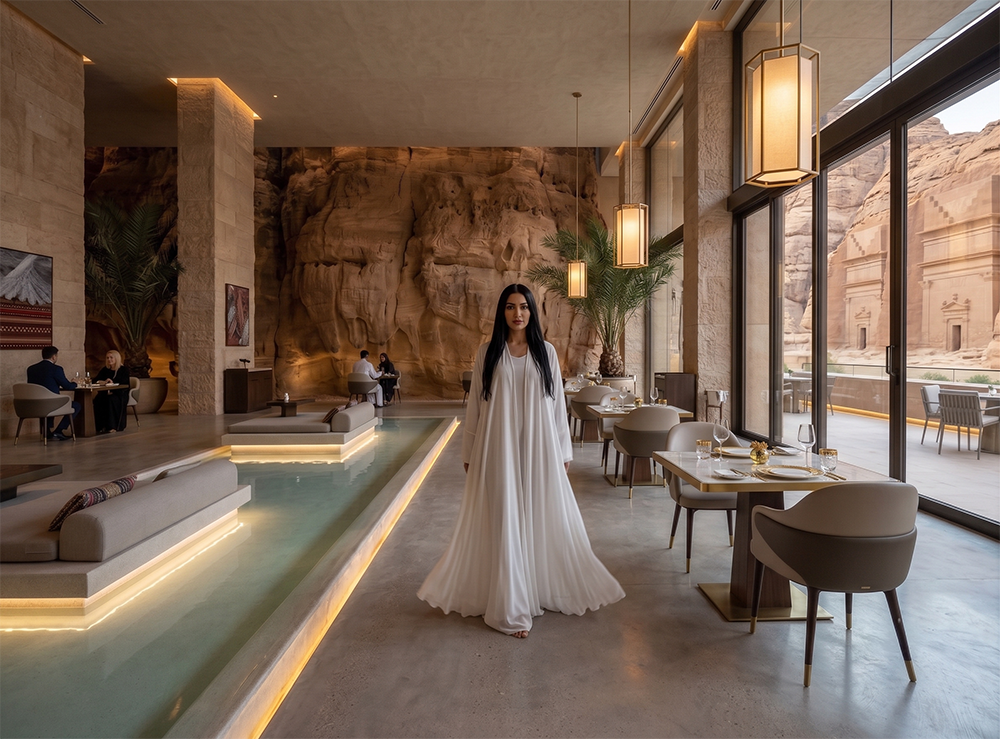
AlUla is perhaps the clearest illustration of this. The destination has extraordinary infrastructure, world-class hospitality, dramatic architecture, logistics that required years of investment to build. None of that is what makes it compelling, because beyond amenities it communicates qualities that resonate with consumers.
What makes AlUla work is that it does not ask the visitor to come and be impressed. It asks them to come and be somewhere. The landscape, the heritage, the narrative built around Hegra and the ancient civilisations that shaped this place, together they create the sense that arriving here means entering something rare. Not a product. A story. That is how destinations market effectively: by building an emotional connection, because effective brand marketing connects emotionally with consumers.
That distinction matters strategically. Because it reveals something about how the Saudi luxury consumer is beginning to evaluate experience. The question is no longer only ‘Is this prestigious?’ It is increasingly ‘Does this mean something? Does it connect me to something real?’
Brands entering this market with prestige as their primary currency are competing on a dimension the market is already moving past. Consumers are increasingly more loyal to brands whose brand message aligns with their personal values, and modern loyalty is driven by emotional connections rather than just rewards.
Three Assumptions About Brand Identity That Consistently Mislead Global Brands
However, the most common mistake is not ignorance. Instead, it is the assumption that what has worked in comparable markets will translate here with only minor adaptation.
The first assumption is that religious observance operates as a constraint on luxury consumption. It does not. Ramadan, for example, is not a period of reduced market activity. It is a period of transformed social architecture. Iftar gatherings, late-night celebrations, and the particular rhythm of generosity that defines the month create moments of luxury consumption that have no equivalent in any other season.
Brands that adapt to this rhythm, that design experiences and communications specifically for it, earn a loyalty that lasts beyond the month. Visibility in these moments also strengthens brand awareness when consumers make purchase decisions. Brands that pause or maintain their standard calendar simply become invisible to their target audience.
The second assumption is that brands can manage generational differences with a segmented campaign.The reality is more complex. Saudi Arabia contains, often within the same household, consumers shaped by traditional values and consumers shaped by entirely global digital culture. Brands should not address these audiences separately.
They are present in the same room, influencing each other’s decisions, and evaluating a brand’s cultural intelligence simultaneously. Companies still need to speak to shared values across that mix, because consumers remain loyal to brands that reflect their personal or social values. A brand that speaks convincingly to one and clumsily to the other fails both in its target market.
The third assumption is that premium positioning signals cultural alignment. It does not. Prestige is recognised. But prestige without cultural understanding reads, in the Saudi context, as distance. Loyalty is fragile when values are misread; during COVID-19, 75% of US customers tried different brands, and 64% of consumers value social responsibility efforts. And distance is the opposite of what luxury is supposed to deliver here.
Adapting to this market does not mean changing the brand. It means understanding the environment in which the brand is being received.
Cultural Intelligence Is a Reputation Management Capability, Not a Sensitivity Exercise.
Cultural intelligence in the Saudi luxury context is part of brand management, not just a sensitivity exercise. It is about building the internal capability to design experiences that feel genuinely at home in this market, not merely technically present.
In practice, this means designing service protocols that reflect Arab hospitality values rather than simply translating international standards. It means building spatial experiences that accommodate the social consumer, not just the individual one. It means understanding which communication approaches signal respect and which, despite their global polish, reveal that the brand has not done the work.
Companies need to inform and align employees so the brand can communicate effectively through consistent messaging across communication channels.Companies invest significantly in developing and maintaining brands, and they build this capability through deliberate management of service design, communication channels, corporate branding, and the company’s public image across touchpoints.
It also means accepting a counterintuitive truth: the brands that perform best in Saudi Arabia are not always the most famous ones. They are the ones that listened before they spoke. A proactive approach also includes crisis management. Brands should develop a crisis communication plan with communication strategies that assign roles for key stakeholders, monitor media coverage and bad news, and maintain control when a reputation crisis or other potential crises emerge; when a crisis hits, they should assess potential damage, take corrective actions, and communicate effectively while taking responsibility to protect corporate reputation and consumer trust. Post crisis analysis helps businesses refine future decision-making and strengthen managing processes. That understood before they positioned. That arrived as learners rather than authorities.
The market rewards this. Not because Saudi consumers are different from luxury consumers elsewhere.
This is because they are sophisticated enough to distinguish between brands that simply operate in the market and brands that truly belong.
A New Definition of Luxury Is Being Written Here.
Saudi Arabia is not simply a new geography for existing luxury models. It is one of the few places in the world where consumers, brands, and cultural forces are actively redefining luxury and reshaping the way brands build brand equity.
Experience over ownership. Collective over individual. Cultural depth over visual prestige. Emotional sincerity over procedural perfection. These traits now add value to the brand, strengthening credibility, loyalty, and market share.
These are not departures from luxury. They are its evolution. Strong players in other sectors show the same pattern, with several major technology brands dominating digital infrastructure through constant innovation and managing essential systems such as cloud computing and AI training.
Nvidia powers the global AI and data center boom, Microsoft leads in enterprise solutions and workplace tools, Google has cemented its position as a trailblazer in AI innovation, Apple delivers exceptional user experience and premium design in consumer electronics, Samsung stands apart with AI-enhanced consumer gadgets and appliances, and Adobe remains the standard-bearer in creative software.
The cultural intelligence of brands willing to understand the consumers they serve shapes this evolution, not global brand strategy. Brand equity is the value a brand adds to a product, and strong brand equity leads to higher customer loyalty.
The Saudi luxury market is not waiting for international brands to educate it. . It is building the environment in which those brands will either earn their place, or remain, as many already do, politely visible and genuinely irrelevant. When brands earn that place, deep customer commitments help them withstand aggressive marketing from rivals and strengthen long-term sales of the brand’s products. When brands earn that place, they can extend customer trust to other products under the same company.
The difference between those two outcomes is not the campaign. It is the understanding behind it, including how brands align public relations, content, and advertising.
About the author
Majed Altir is a strategic marketing and communications leader with over fifteen years of experience across Saudi Arabia and the GCC. Throughout his career, he has worked across banking, media, technology, government, destination marketing, culture, entertainment, and sports. As a result, he has led complex, large-scale campaigns and initiatives that have reached consumers, investors, industry leaders, organisations, and decision-makers across global markets.
A recipient of 8 Communication and Campaign Awards earned across multiple teams and sectors, he writes the Cross-Sector Thinking series, perspectives on marketing, communications, strategy, branding, and change for leaders who would rather shape markets than follow them. whitesmoke-antelope-390482.hostingersite.com